3 days in Bordeaux with
Vignobles André Lurton
It’s only a 10-minute drive between the châteaux of Couhins-Lurton and Cruzeau. It takes you through Léognan, past Château La Louvière and Château de Rochemorin. En route, you turn left at a roundabout that, as of 2023, bears both the name and a metal likeness of André Lurton.
There’s a good reason for this. André was the driving force behind the creation of the Pessac-Léognan appellation. He rallied the troops, never wavered in the face of French bureaucracy, and it took them 22 years (!) to get recognised.
Pessac-Léognan (or Pessac, for short) is the youngest appellation in Bordeaux. It’s also home to all the Crus Classés of Graves, which together make up a mere 5% of total production. Each of Lurton’s châteaux in Pessac-Léognan has a character all of its own, despite their proximity.
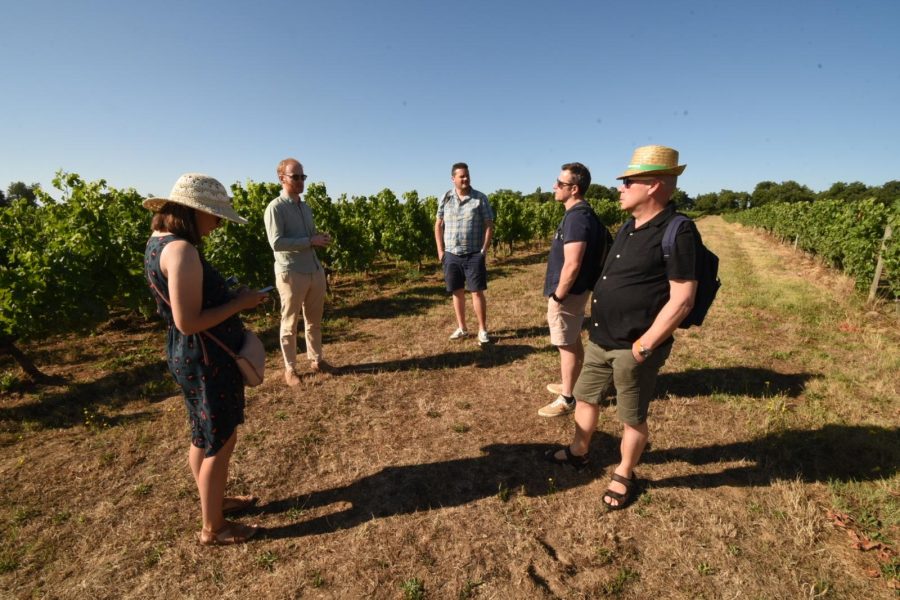
Château de Cruzeau is known for its gravelly soils, which André spotted in 1973 after a mini-tornado. Then covered with young pine trees introduced post-phylloxera, he replanted with Cabernet, Merlot and, more recently, Petit Verdot. The wines show real vitality: bright aromas and supple texture.
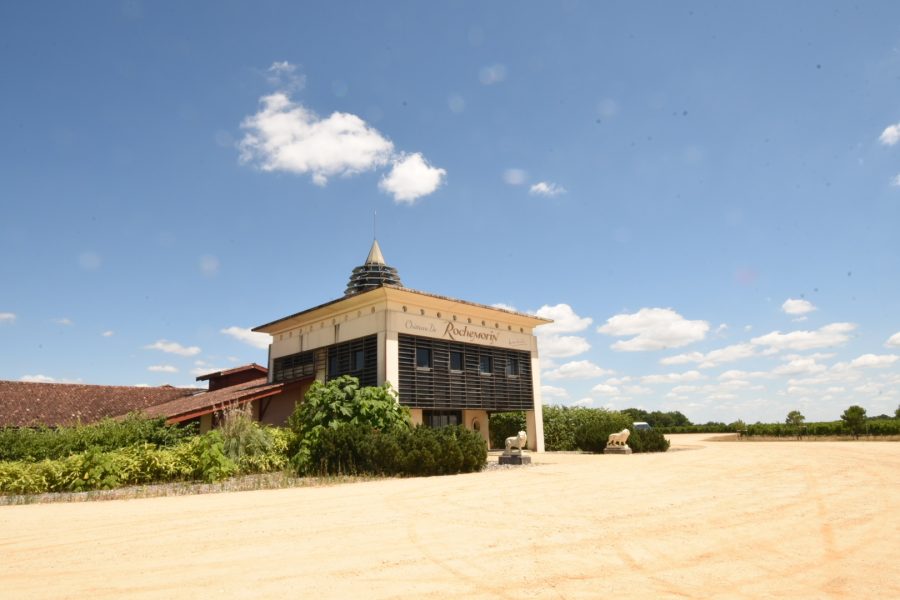
Château de Rochemorin has an identity that, frankly, hardly feels like Bordeaux. Part modernist winery, part Spanish bodega, its red-barn exterior, cacti out front and angular chrome pagoda cut a stark silhouette against the skyline. The warm microclimate contrasts with the cool, cavernous, gravity-fed winery and barrel hall below. The reds are on a great run of form, with 97 points and Best in Show medals at the Decanter Awards in both 2023 (2020 vintage) and 2025 (2022).

Apéro at Couhins-Lurton hits different. Lovingly renovated and impeccably styled, the château backdrop calls for something sparkling on a summer’s evening. Luckily, Jacques has just the thing: his Cabernet Sauvignon traditional method fizz, Diane. It’s the perfect prelude to the two Couhins wines, from this smallest of Cru Classé estates (18 ha total, 6 ha Sauvignon Blanc and 12 ha split 80/20 Merlot and Cabernet). The clay-limestone terroir produces a vibrant, mineral white that’s fermented and matured in barrel. The red, always Merlot-dominant, is fermented in various vessels including foudre and amphora. Finesse really is the name of the game at Couhins – these wines are very special.
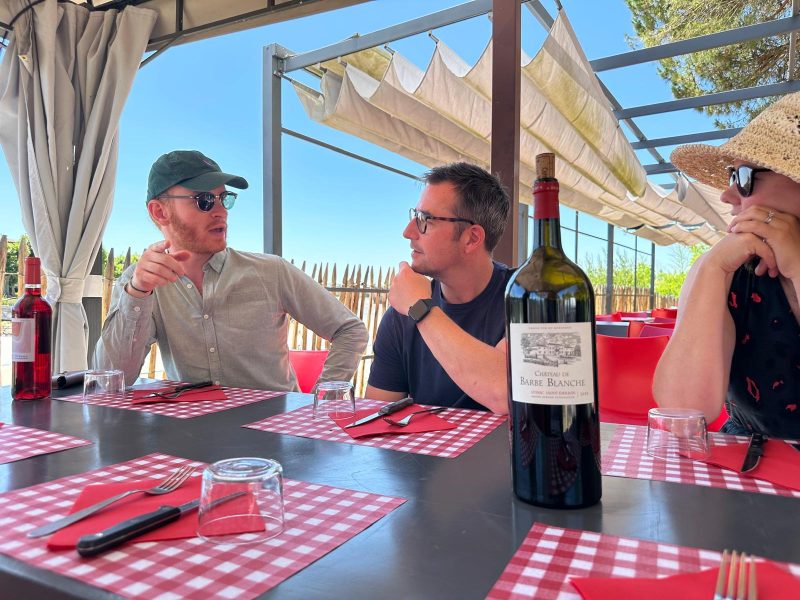
The Lurton portfolio extends well beyond Pessac, of course. Over on the Right Bank, an hour or so by car, the charming satellite village of Lussac-Saint-Emilion is home to Château de Barbe-Blanche. The vineyards sit at 90m altitude on a south-facing plateau that shares a vein of limestone (hence the name “White Beard”) with the famous medieval town a few miles away. The influence in marked in the wine, a Merlot-Cabernet Franc blend, which is bright, supple and generous.
And then there’s Château Bonnet in Entre-deux-Mers, the central hub of the operation: family home and business HQ. It’s one of Bordeaux’s leading sustainable estates, with 135 ha managed using a holistic ecological approach. Beehives, an orchard, fallow land, a henhouse and biocontrol plots provide tangible proof of this in action. The wines deliver quality and value at every level and in almost every style, none more so than the remarkable Divinus de Château Bonnet, which offers incredible concentration and elegance for a fraction of the cost of many of its neighbours.
Local tips for the region
Don’t mind sand in your shoes? Climb the imposing Dune du Pilat for great views of the Bassin d’Arcachon.
Season and weather permitting, the riverside Guinguette de la Vieille Tour in Libourne is well worth a stop for laid-back French fare.